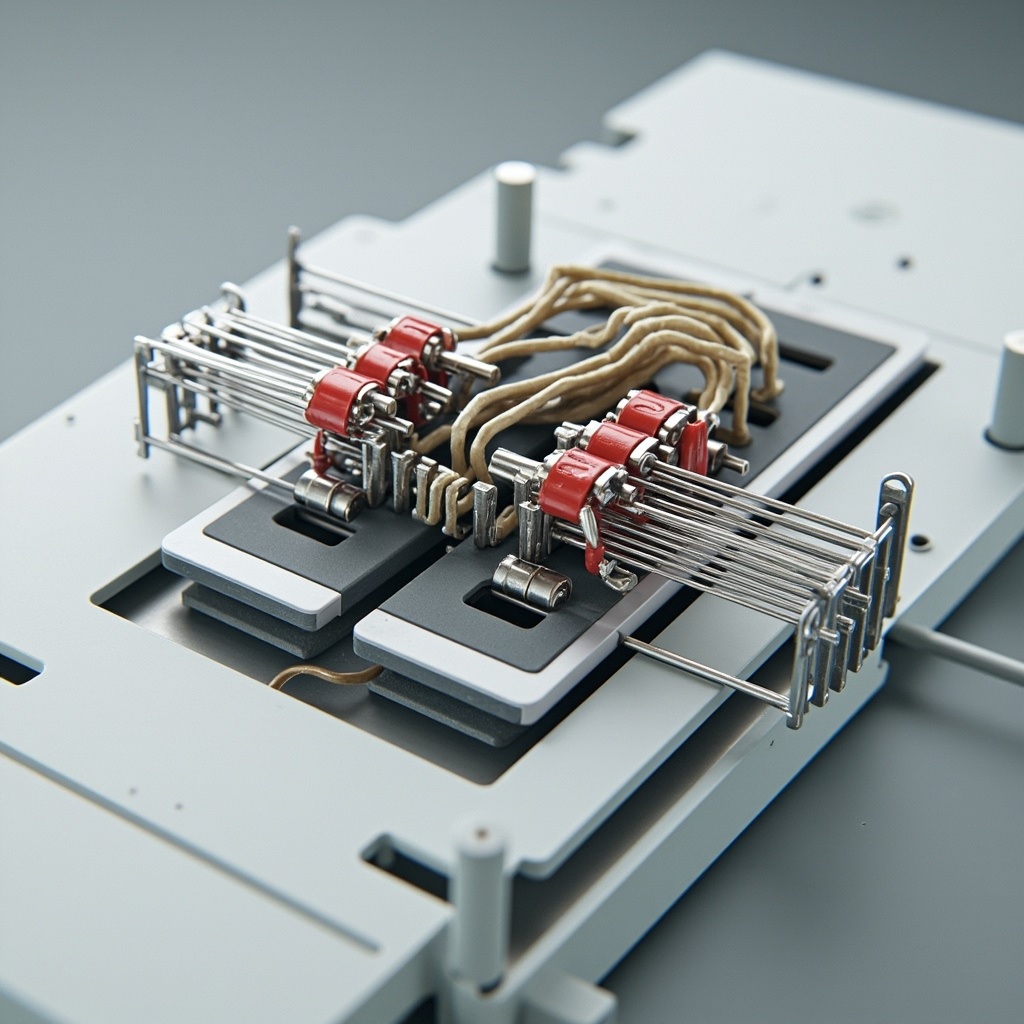
If you have ever clicked a mouse, pressed a car window switch, or heard the satisfying click of a microwave door closing, you have already met a snap action micro switch. But that little click is not just a sound. It is the result of a carefully engineered mechanical event. The word “snap” is not marketing fluff. It describes a specific, deliberate physical behavior inside the switch. Understanding what makes it snap is understanding why this switch is so reliable, so fast, and so widely used in everything from industrial controls to smart home devices.
At the heart of the mechanism lies a tiny, pre-stressed spring. This is not a simple coil spring you find in a ballpoint pen. It is a precisely shaped piece of metal, often called a snap-action spring or a trip lever. The genius of the design is that this spring stores energy in an unstable state. When you press the actuator, you are not directly pushing two contacts together. You are loading that spring. You are bending it, storing mechanical energy like a drawn bow. The switch resists this force until a very specific, very small threshold is reached. Then, in a fraction of a millisecond, the spring releases all that stored energy at once. The contacts snap from one position to the other. There is no slow drag. There is no hesitation. There is only a clean, fast, and decisive transfer.
This sudden transfer is what gives the switch its name and its value. A standard switch, like a light switch in your house, uses a slower, wiping motion. It works fine for a lamp. But in a high-speed production line or a safety interlock on a medical device, that slow motion can cause arcing. Electricity can jump across the gap as the contacts move, burning them and shortening the switch’s life. The snap action eliminates this. Because the contacts move so fast, the arc is extinguished almost instantly. The switch lasts for millions of cycles, not thousands.
The “snap” also creates a tactile and audible feedback. You feel it. You hear it. This is critical for user interfaces. When you press a button on a control panel and you feel that crisp click, you know the command has been registered. There is no ambiguity. This is why Unionwell micro switches are found in so many high-end appliances and automotive controls. The snap is a promise of certainty.
The geometry of the internal parts is everything. The shape of the spring, the angle of the moving contact, and the gap between the terminals are all calculated to within thousandths of a millimeter. A tiny change in the curvature of that spring changes the force required to snap it. It changes the travel distance of the actuator. This is why a micro switch designed for a sensitive door lock feels different from one designed for a heavy-duty foot pedal. The snap is tuned. It is engineered for a specific purpose.
So, what makes it snap? It is the controlled release of stored mechanical energy. It is a tiny, violent, and perfectly predictable event. It is the difference between a switch that works and a switch that works for a million cycles without a single miss. The next time you hear that click, remember that you are hearing physics doing its job. You are hearing the anatomy of a snap action micro switch in action.